Posted by Justtours News
Nigeria and the United Arab Emirates (UAE) have taken an important step in strengthening bilateral economic relations with the signing of a Comprehensive Economic Partnership Agreement (CEPA) in Abu Dhabi.
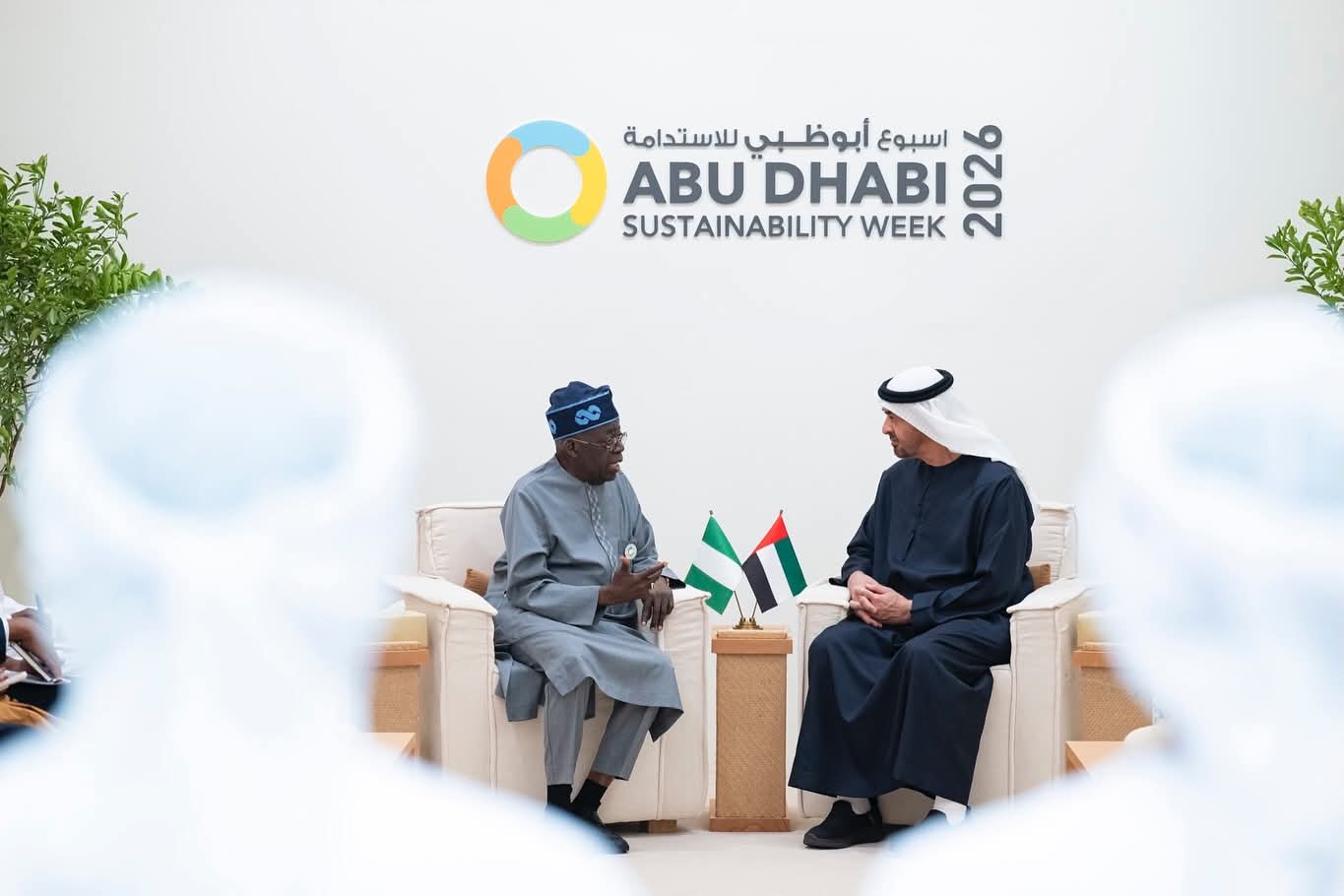
The agreement was formalised during the Abu Dhabi Sustainability Week, in the presence of His Highness Sheikh Mohamed bin Zayed Al Nahyan, President of the UAE, and Nigeria’s President, Bola Tinubu.
It is believed the Nigeria–UAE CEPA marks a new chapter in the evolving relationship between both countries, built on years of diplomatic engagement, growing trade volumes, and expanding people-to-people connections.
It is hoped the move will boost opportunities for Nigerian exporters, manufacturers, and service providers, while also providing stronger assurances and clearer frameworks for UAE investors seeking to participate in Nigeria’s productive sectors.
The UAE emerged as one of Nigeria’s most strategic partners in the Middle East with strong interests spanning energy, aviation, logistics, infrastructure, tourism, and investment. Conversely, Nigeria remains a key African partner for the UAE, offering access to one of the continent’s largest markets and serving as a gateway to wider African trade.
The agreement is the outcome of sustained negotiations led by Nigeria’s Minister of Industry, Trade and Investment, Dr. Jumoke Oduwole, and her UAE counterpart, Dr. Thani bin Ahmed Al Zeyoudi.
Observers credit both ministers and their technical teams for the discipline, clarity of purpose, and commitment that brought the talks to a successful conclusion.
Under the CEPA framework, thousands of Nigerian products are expected to enjoy duty-free access to the UAE market.
Analysts note that the agreement aligns with Nigeria’s broader industrialisation and economic diversification agenda, while reinforcing its role as a strategic hub for trade and investment into Africa.
Beyond trade liberalisation, the partnership is seen as a practical expression of Nigeria’s ongoing economic reforms and its focus on targeted, mutually beneficial international partnerships.
By improving market access, encouraging investment flows, and strengthening institutional cooperation, the agreement is expected to deliver long-term benefits for both economies.
Stakeholders in the two countries are believed to have welcomed the deal as a forward-looking instrument that reflects shared ambitions for sustainable growth and prosperity.