Posted by JustTours News
The Standards Organisation of Nigeria (SON) has said standards, certification and strict enforcement are important to Nigeria’s transition to Electric Vehicles (EVs) and Compressed Natural Gas (CNG)-powered transportation.
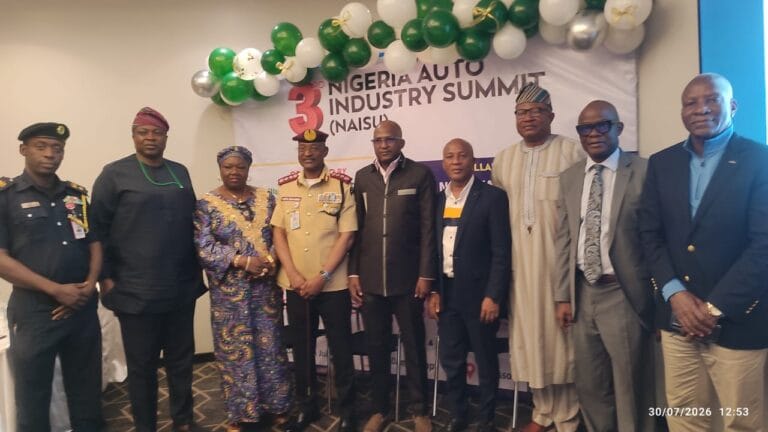
The Director General of SON, Dr. Ifeanyi Okeke, expressed this view at the third Nigeria Auto Industry Summit in Lagos, recently.
Okeke, who was represented by Mr. Olalekan Omoniyi, the Deputy Director, Research and Statistics Division, SON, at the summit, organised by the Nigeria Auto Journalists Association (NAJA) with the theme titled “Nigeria’s Clean Mobility Future: The EV and CNG Journey Under the President Bola Tinubu Administration.”
He said safety remained central to the adoption of EV and CNG, pointing out that consumers must trust that CNG cylinders, EV batteries and charging systems met approved safety standards and deliver value for money.
“The SON Act, 2015 empowers it to develop standards, certify products and enforce compliance across the country’s clean-mobility value chain.
“The agency had developed more than 80 CNG standards, including the 87-standard CNG suite and NNG 1214:2024, alongside expanding EV standards.
“The SON’s conformity assessment schemes, including SONCAP, MANCAP and VehCAS/VehCAP, will support Nigeria’s transition to cleaner transportation,” the DG said.
He enjoined government to make certification compulsory for importing, registering, licensing and procuring EV, CNG vehicles, components and charging equipment.
He also called for speedy completion and publication of the national EV standards, covering charging interoperability, battery safety and end-of-life battery management.
“SON also advocates licensing and certification of all vehicle conversion centres, ensuring only qualified personnel handle CNG conversion under approved standards,” he said.
Okeke said the agency recommended mandatory certification labels for CNG cylinders, EV batteries and chargers, backed by traceability and routine compliance checks.
“There is the need for greater investment in accredited laboratories to test high-pressure cylinders, batteries and charging equipment,” he said.
Okeke called for stronger collaboration among relevant agencies through a national guideline defining responsibilities using SON’s standards as the common reference.
He urged the linking of financing schemes to certify products while expanding mutual recognition to boost exports under the African Continental Free Trade Area through the SON-ARSO Dual Marking Scheme.
Similarly, he called for sustained public awareness campaigns on certification marks and the dangers of uncertified equipment.
“SON reaffirms its commitment to supporting a safe, sustainable and globally competitive clean-mobility future for Nigeria,” he said.
The Chairman of NAJA, Mr. Theodore Opara, said nations were embracing cleaner transportation technologies thereby reducing carbon emissions and building more sustainable economies.
Opara said Nigeria could not afford to be left behind in adopting cleaner transportation.
He said the theme of the programme reflected the urgency of the national conversation on alternative energy vehicles and the enormous opportunities before the country.
“President Bola Tinubu has initiated significant reforms that are accelerating conversions around CNG and EVs, local automotive manufacturing, energy transition and sustainable transportation.
“These developments present both opportunities and challenges that require collaboration among policymakers, regulators, manufacturers and others, hence, the reason for assembling these stakeholders to examine Nigeria’s stand,” he said.
Opara hoped that the discussion would not end as another conference but expect practical recommendations capable of influencing policy formulation.
Email us just_tours@yahoo.com